There’s a certain kind of silence you only hear in the Arizona desert—a silence that carries history with it. It’s the quiet you find when you walk through a town that once echoed with voices, machinery, and dreams, but now sits suspended between memory and wilderness. Living part-time in the desert outside Yucca, we’ve learned that Arizona isn’t just sun and sand. It’s a place where the past sticks around, half-buried and sun-bleached, waiting for curious travelers to stop and listen.
Exploring ghost towns in Arizona is one of those adventures that stays with you. The stories aren’t just about old buildings—they’re about resilience, ambition, failure, and the kinds of communities people built long before highways and smartphones changed the world.
This blog isn’t a list of every ghost town scattered across the state. Instead, it’s a guide to understanding these forgotten places, told from the perspective of people who live in the desert and spend a lot of time tracing the old routes that connected miners, homesteaders, ranchers, and dreamers.
Why Arizona Has So Many Ghost Towns
Before you even step foot in one, it helps to know why ghost towns appear in the state in the first place.
Arizona was once the “Wild West” in every sense. It was a land defined by opportunity, but shaped by extremes. Mining rushes, railroad construction, silver booms, copper strikes, and ambitious frontier settlements created bursts of vibrant activity. Entire towns sprang up overnight around a promising vein of ore or a newly cut rail line. But just as quickly, they disappeared.
Oatman: The Ghost Town That Refuses to Die
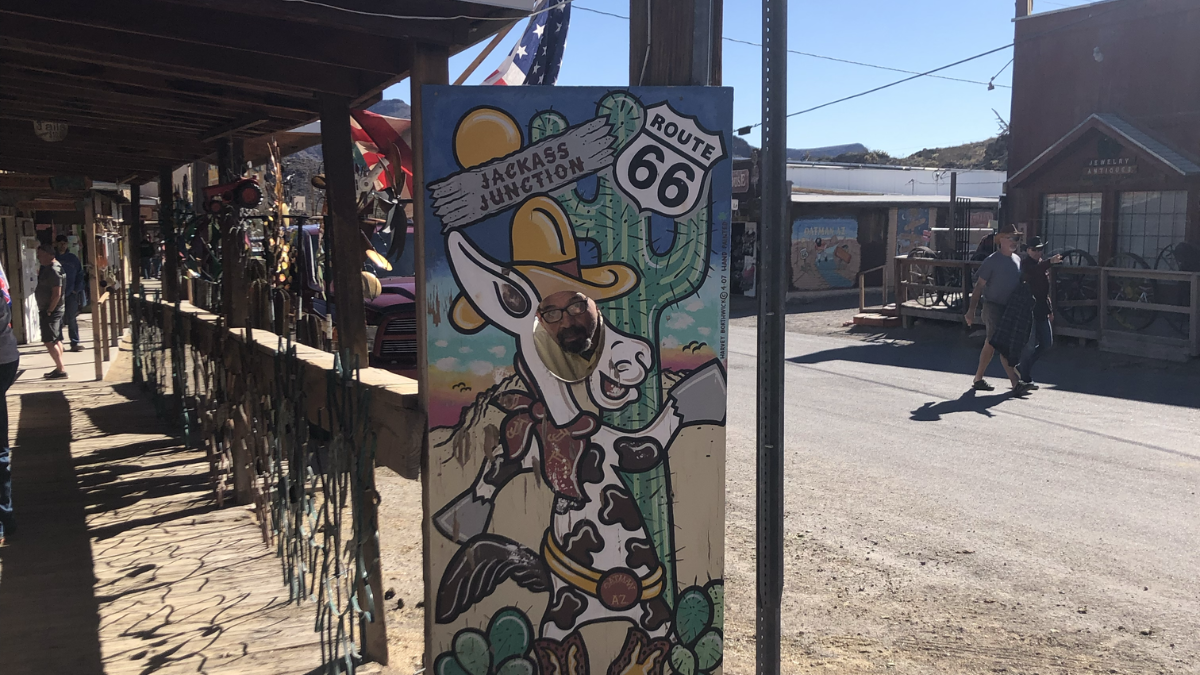
If you drive about an hour from our off-grid homestead near Yucca, you eventually wind your way up the Black Mountains toward Oatman, one of the most famous ghost towns in Arizona. But the word ghost hardly fits anymore. Oatman is still very much alive in its own strange way.
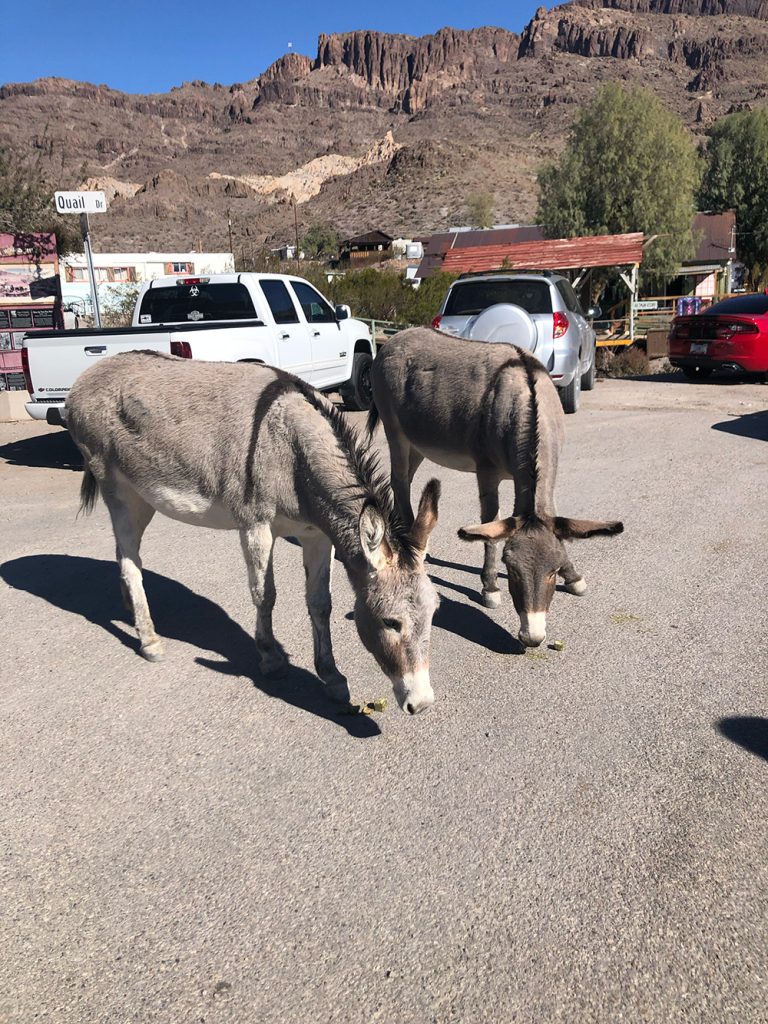
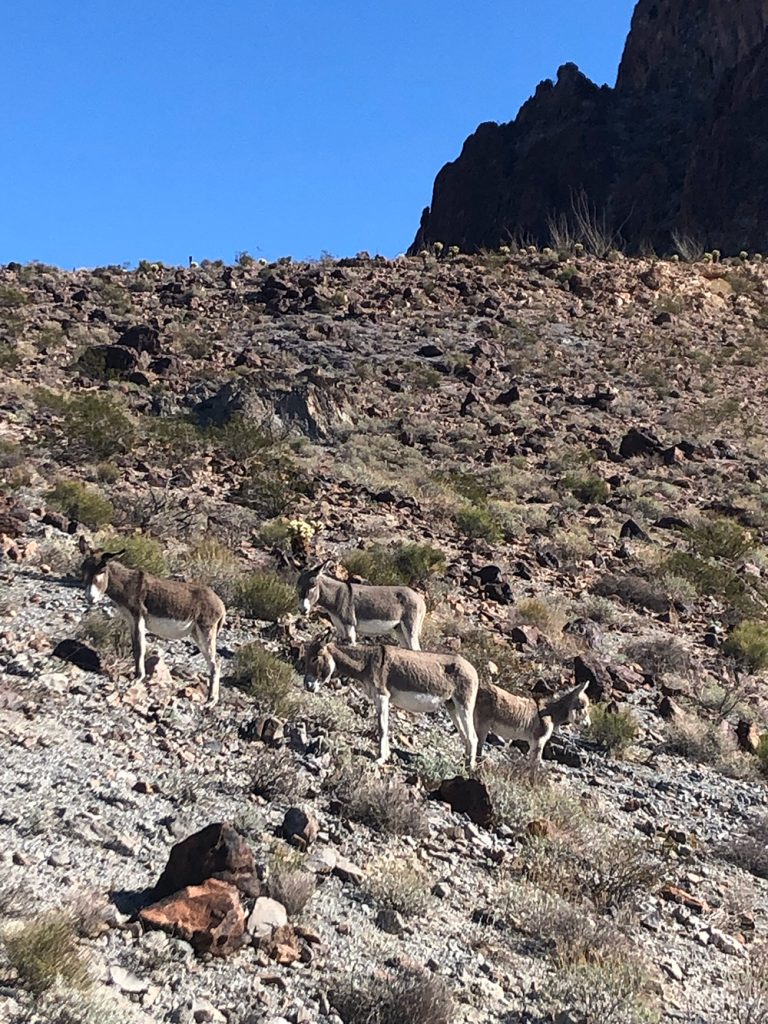
Burros wander the streets like they own the place. Tourists line up for homemade fudge. Actors reenact shootouts in the middle of the road. The old Oatman Hotel—with its creaking staircase and Wild West charm—still carries whispers of the early 1900s mining days.
Yet, behind the staged entertainment and quirky roadside energy, the bones of the original town are still present. Old miner cabins cling to the hillsides, rusted machinery lies half-buried in the earth, and the desert reminds you that everything here was built on borrowed time.
Oatman is a ghost town that adapted instead of fading—a reminder that history can reinvent itself in interesting ways.
Chloride: Art, Eccentricity, and Desert Quiet
North of Kingman, AZ sits Chloride, a place that feels forgotten but lived in at the same time. It’s a town with a mix of abandoned buildings and quirky desert character you will only find in a long-surviving mining settlement.
Chloride is one of Arizona’s oldest continuously occupied mining towns, but many of its buildings feel frozen in another century. Old storefronts stand quiet in the sun, while the surrounding hills hide remnants of mining operations long reclaimed by the desert. Then, there’s the art.
The Chloride Murals—large, colorful rock paintings created in the 1960s—sit up on a rugged trail outside town. They add a strange, almost mystical touch to the otherwise subdued landscape. Chloride isn’t a polished destination, but that’s exactly why it’s worth visiting. It’s a place where time stretches differently.
Goldfield: A Museum Wrapped in a Town
Goldfield, near Superstition Mountain, feels like stepping onto a movie set, which might explain why so many films have been shot there. It’s more restored than abandoned, offering saloons, mine tours, a narrow-gauge railroad, and reenactments. Despite the cinematic display of it all, Goldfield is rooted in real history.
Founded during the 1890s gold rush, the town boomed so quickly that it seemed destined for greatness. But as with most mining towns in Arizona, the gold didn’t last. Within a decade, Goldfield was nearly empty. The version you see today is a curated revival—part museum, part tourist stop, part homage to a past that shaped the region. It’s a good entry point for travelers who want to experience ghost town history without wandering too far from amenities.
Jerome: The Town That Slipped Down the Mountain
Jerome is one of the most dramatic ghost towns in Arizona, not because it’s abandoned, but because it nearly vanished more than once. Built on Cleopatra Hill, Jerome clings precariously to steep roads and sharp cliffs. Entire buildings slid downhill over the years as mining tunnels collapsed beneath them. For a while, the population dipped close to zero, leaving behind a shell of a once-thriving copper town.
Today, Jerome is an artist enclave layered over old mining ruins. Wander down a quiet alley and you’ll see foundations crumbling into the hillside, but look up, and you’ll find galleries, cafes, and ghost tours.
It’s a special place where creativity has breathed new life into structures that once seemed doomed.
What Ghost Towns Teach Us About the Desert
Living in the desert teaches you to respect the land—its quiet power, its unpredictability, and its ability to erase what no longer belongs. Ghost towns remind us of this in the most physical way possible. When you walk through an abandoned saloon or run your fingers across weathered wood, you feel the fragility of human ambition. These towns were built on hope, risk, and the belief that the land would reward hard work.
Sometimes it did. Sometimes it didn’t. The ruins that remain are proof of both.
Maybe that’s why exploring ghost towns in Arizona feels so meaningful. They connect you to lives lived boldly, even when the ending wasn’t what people expected.
Final Thoughts: Wandering Into the Past
We never planned to split our lives between an off-grid homestead in the Arizona desert and the green summers of Gunnison, Colorado. Life just took us that way. But in that in-between space, we’ve developed a special love for the forgotten corners of the Southwest.
Ghost towns capture something essential about this region, whether that be the beauty or the hardship. And still there is the resilience and the stories that linger long after the people have gone. So, if you ever find yourself driving lonely desert highways, keep an eye out for a side road leading toward something quiet and sun-bleached in the distance. Sometimes, the best stories are hiding in places where the map shows almost nothing at all.